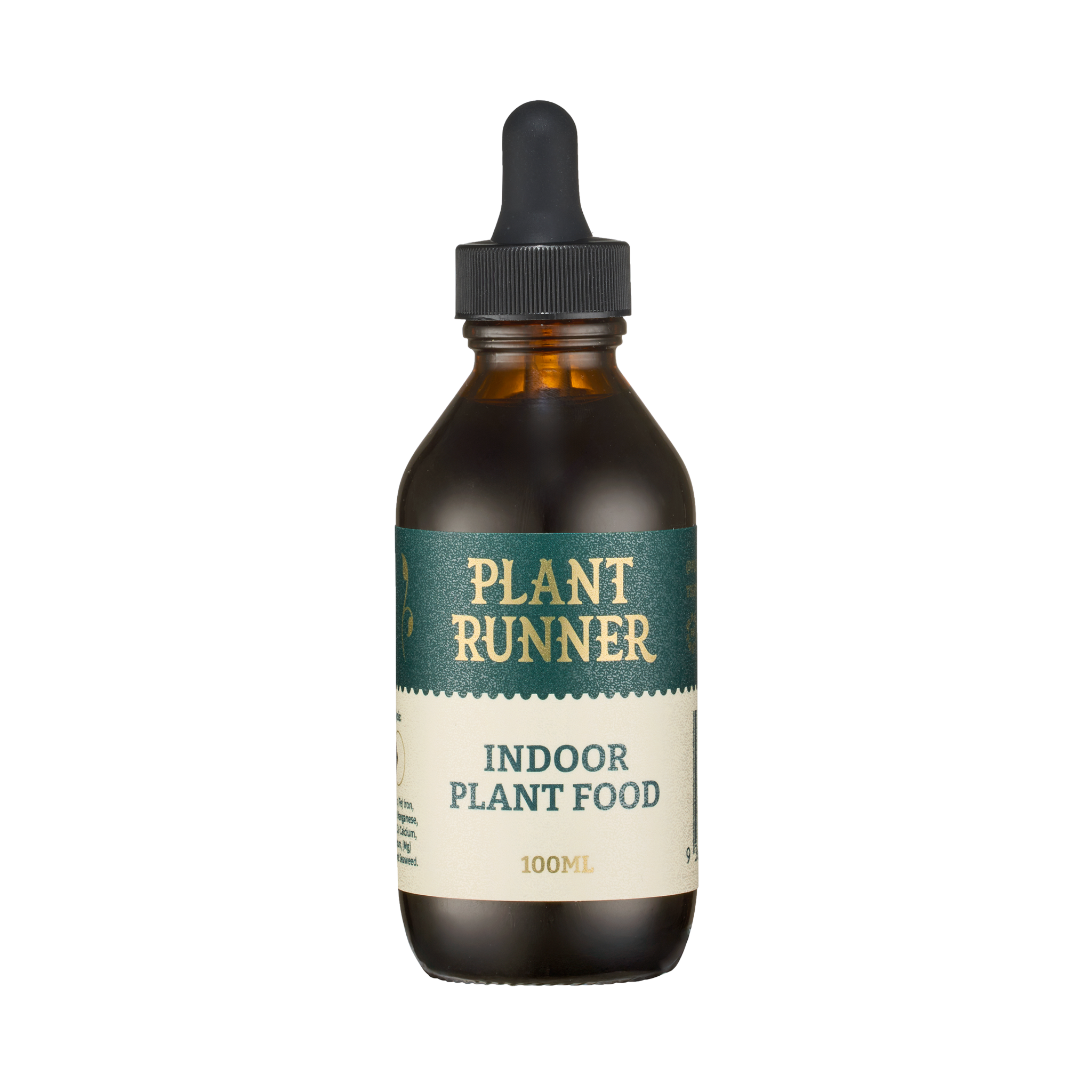
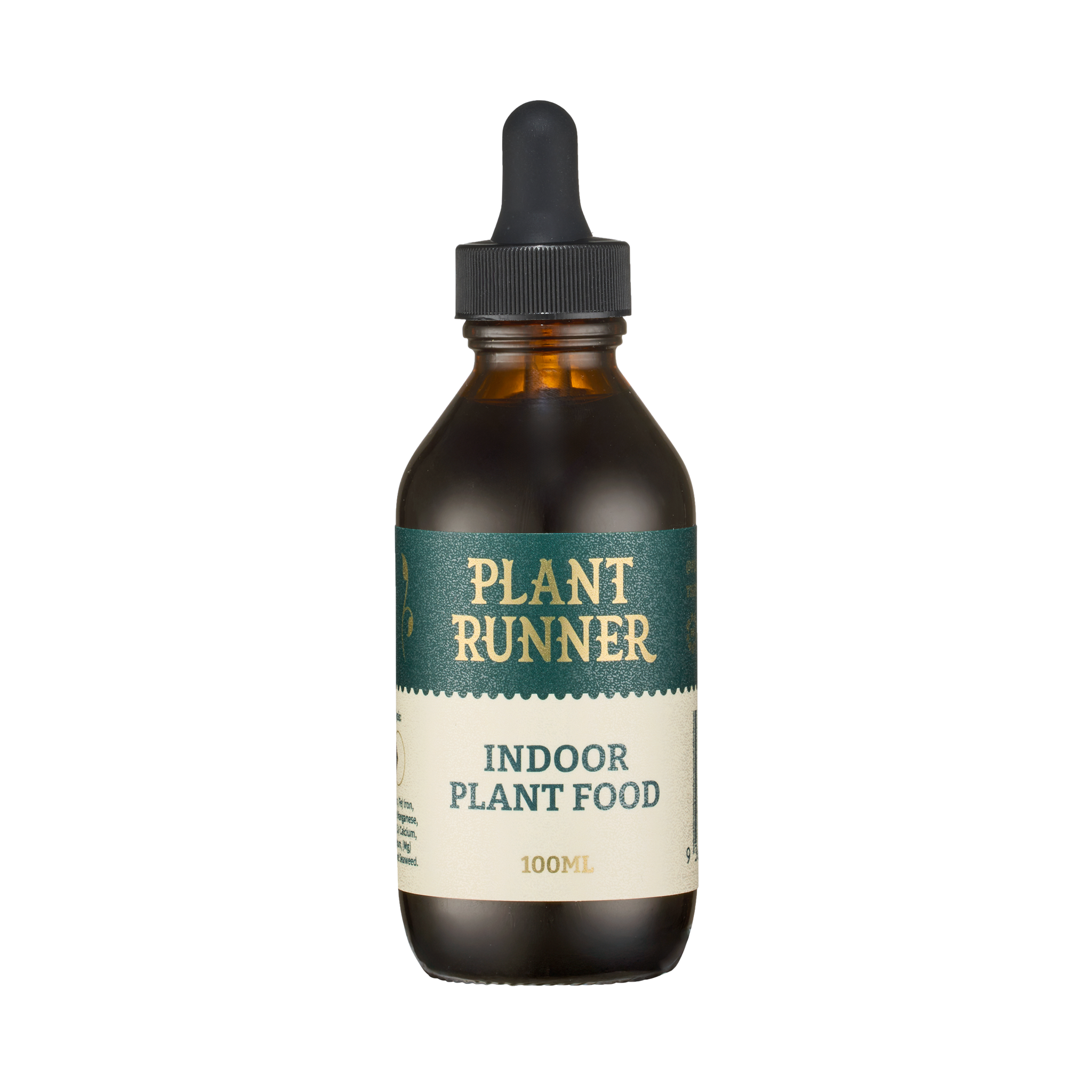
The one thing most indoor plants are quietly missing.
-
What it is: a balanced liquid feed — 12.2% nitrogen, 11.9% potassium, trace elements and seaweed extract
-
What it does: replaces the nutrients a pot runs out of, in a form roots can take up straight away
-
Best used: on plants growing in potting mix — monstera, pothos, peace lily, ferns, palms
-
How to use: 1ml per litre in your watering can, every second watering while plants are growing
-
How far it goes: 100ml makes up to 100L — well over a year for most collections
Outdoors, plants send roots through the soil to find what they need. Indoors, they're stuck in a pot with whatever you give them — and once the nutrients in the mix are used up, there's nowhere else to go. Indoor Plant Food is how you keep giving them what they'd otherwise go looking for.
Feed is step four. Light, water and mix come first — that's the Plant Runner Method, in that order. Get those three right, and this is what turns surviving into new leaves.
More than the three letters on the front of most bottles. It's a balanced liquid feed, with 12.2% nitrogen, 11.9% potassium, a full set of trace elements and New Zealand seaweed extract. The traces are chelated to stay available, which matters more than it sounds. Hard tap water is where some trace elements in ordinary feeds can quietly become unavailable.
Made for plants growing in potting mix: monstera, pothos, philodendron, peace lily, fiddle leaf fig, rubber plant, ZZ, ferns and palms. Growing in leca, water or a chunky bark mix with no potting mix at all? That's what Aroid Plant Food is for.
Built around the way you already water. Feed every second watering while your plants are putting out new growth, so there's no schedule to remember. When growth slows, you water less often, so feeding slows with it — and if a plant stops growing altogether, stop feeding until it starts again. It's a forgiving rate: 1ml per litre, measured with the marked dropper, or half-strength for anything sensitive.
No fish in it. Vegan-friendly and almost completely odourless — nothing hanging around the lounge room for two days afterwards. 100ml of concentrate in a glass bottle makes up to 100L of feed, which for most collections is well over a year.
For the rest of the setup, pair it with Neem Oil Leaf Shine to keep leaves clean and making the most of their light, and Indoor Potting Mix when it's time to repot.
Made in Melbourne, formulated by horticulturalists (a.k.a. our nerdy selves).
Shake before use.
How much. 1ml per litre of water. A standard watering can holds around 5L, so that's 5ml. If you've only got a couple of plants and you water from a jug, 1ml in a litre is the same thing — the dropper is marked, so you're not estimating either way.
When. While your plants are actively growing — spring and summer for most — feed every second watering. Tying it to watering rather than the calendar does the thinking for you: a plant drinking fast in a bright spot gets fed more often than a slow one in a dim corner, which is exactly how it should work.
Cooler months. Growth slows, and the need to feed slows with it. Ease back to a half-strength feed roughly once a month.
Sensitive plants. Feed at half strength — 0.5ml per litre.
Freshly repotted plants. New mix comes with nutrients of its own. Hold off for the first few weeks, then start feeding normally.
As a foliar feed. Dilute and apply with a mister for a light top-up through the leaves. We use low-biuret urea — the grade made for foliar feeding — so it won't scorch the way ordinary feeds can. Still worth avoiding direct sun, and delicate, hairy or freshly unfurled leaves.
Made up too much? Diluted feed keeps about 48 hours. After that, tip it out and mix fresh.
Missed a feed? No harm done. Pick it back up at the next watering — plants don't hold grudges.
Storage. Out of direct sunlight.
Volume: 100ml concentrate — makes up to 100L of feed
Bottle: Glass
Vegan-friendly
Made in Melbourne
Typical analysis (% w/v)
Nitrogen (N)12.2
Phosphorus (P)1.9
Potassium (K)11.9
Calcium (Ca)0.0144
Magnesium (Mg)0.0075
Iron (Fe)0.006
Manganese (Mn)0.006
Zinc (Zn)0.0104
Copper (Cu)0.006
Boron (B)0.0018
Molybdenum (Mo)0.0002
Trace elements are chelated to remain available in both alkaline and acidic conditions. Plus seaweed extract.