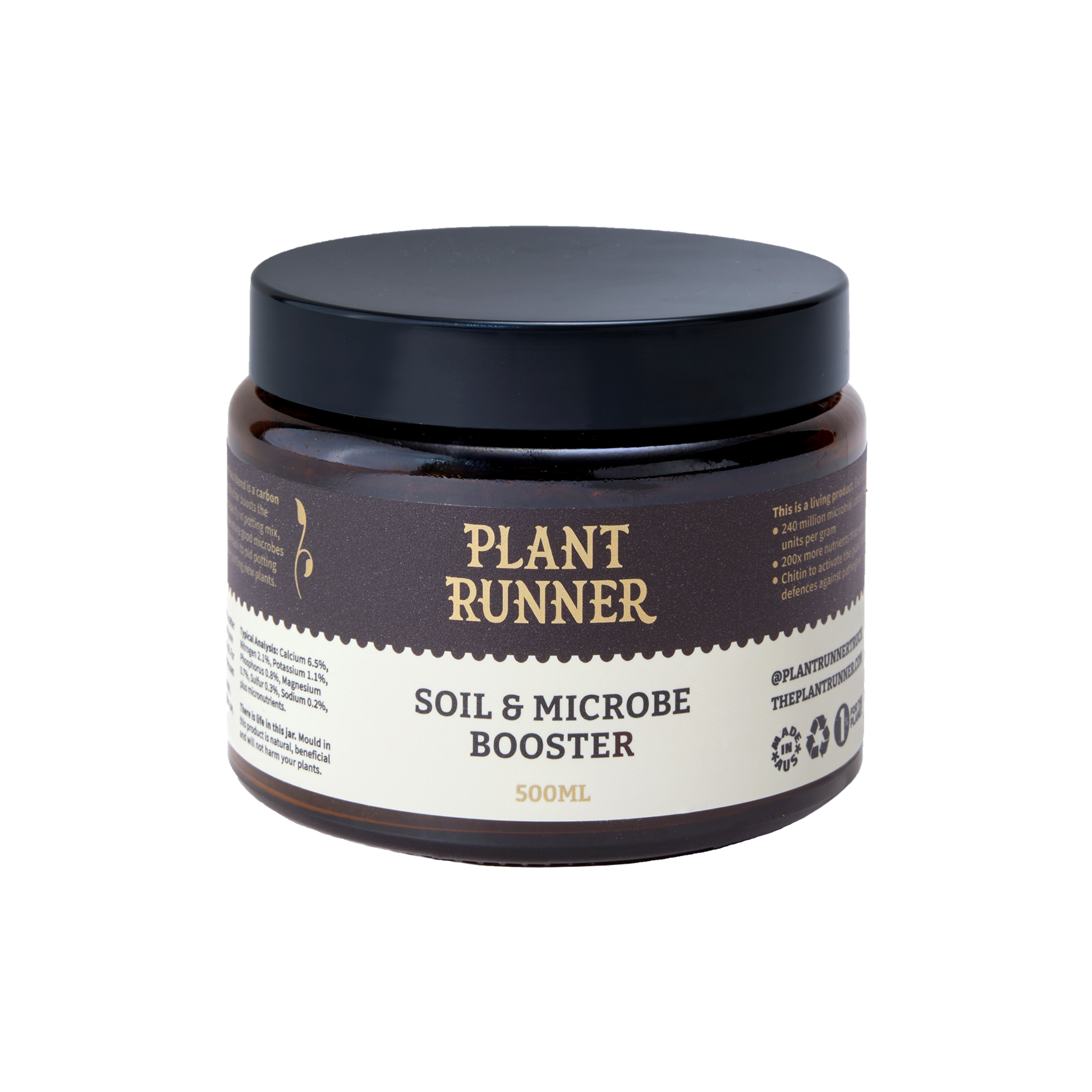
Outdoors, soil is alive. Fungi, bacteria, worms and insects turn dead material into something roots can use, and they've been doing it without any help for a very long time. A pot has none of that. Fresh potting mix is mostly bark and coir, and nothing moves in on its own.
-
What it is: black soldier fly frass — the manure and shed skins from farmed insects — blended with Australian biochar.
-
What it does: brings living microbes, organic matter and a slow, mild feed into a pot that started out with none.
-
What it isn't: a fertiliser. It's a soil amendment. Keep feeding as normal.
-
Best used: stirred through fresh mix at repotting, or worked into the top few centimetres of a pot that's been in the same mix a while. Also for garden beds and compost.
-
How to use: a little goes a long way — rates below.
Frass carries a living microbial community into the mix, along with the organic matter those microbes feed on. As they break it down they release nutrients the roots can take up — slowly, over weeks, not all at once. The biochar keeps it there: a porous charcoal that holds water and nutrients in the root zone instead of letting them wash through, and gives the microbes somewhere to live. Nitrogen 2.1%, phosphorus 0.8%, potassium 1.1%, plus iron, copper, zinc and manganese in trace amounts. Deliberately mild. It's not here to replace your plant food; it's here to make the mix better at holding and delivering what you give it.
It also carries chitin, from the insect exoskeletons — the reason frass gets talked about beyond its nutrients. We've written that up in what is frass?
One thing to know: it's organic matter, and organic matter in a pot that's kept wet is what fungus gnats are looking for. Let the mix dry back properly between waterings and they don't get a foothold. If you've got them already, here's what to do.
This is the Mix step of the Plant Runner Method: get the roots' environment right before you reach for feed. A by-product, not a product — frass is what's left after insects are farmed on food waste; nothing is grown, mined or manufactured to make it. Australian frass, Australian biochar, blended in Melbourne. 500ml jar or 3L pouch, year round.
Pairs with Aroid Mix and Indoor Potting Mix: stir it through at repotting and the mix starts out with the life it would otherwise take months to acquire.
How much to use
|
Use
|
How
|
Rate
|
|
Indoor pots — repotting
|
Stir through fresh mix
|
5% by volume (1 in 20) — about a heaped tablespoon per litre of mix. Up to 10% for tired mix or large planters.
|
|
Indoor pots — between repots
|
Scrape back the top 2cm, work in, water in
|
1 tablespoon per 15cm of pot diameter, once or twice a year
|
|
Garden beds and new plantings
|
Work into the top 10cm, or mix through the backfill
|
1–1.5L per m², or 5% of backfill volume. Up to 10% in poor sandy soil.
|
|
Trees
|
Rake into the surface under the canopy
|
1–5L per m² — the higher end for newly planted trees
|
|
Compost
|
Mix through the heap
|
5% by volume
|
|
Seedlings and cuttings
|
Mix through the raising mix
|
5%, no more
|
Use year round. Water in after applying. Keep the lid on between uses — it's a living product and does best kept dry and out of the sun.
Ingredients
Black soldier fly frass (insect castings and shed exoskeleton) and Australian biochar.
Analysis
Nitrogen (N) 2.1% · Phosphorus (P) 0.8% · Potassium (K) 1.1%. Iron, copper, zinc and manganese present in trace amounts [replace with figures if the spec sheet carries them]. Deliberately mild — this is a soil amendment, not a fertiliser, and it's designed to sit alongside a liquid feed rather than replace one.
Microbial content
Typically 240 million colony-forming units per gram at packing (supplier analysis). A living product: the count drifts with age and storage, which is why the lid stays on and the jar stays out of the sun.
Chitin and induced resistance
Frass contains chitin from the insect exoskeleton. In soil, chitin feeds chitin-degrading microbes, and a body of research links that activity to induced systemic resistance (ISR) — a plant's own defence response, primed rather than supplied. Most of that research uses chitosan (processed chitin) applied directly; how much carries over to raw frass in a pot is still open. We include it because it's the most interesting thing about frass, not because we can promise what it does. The science is on the blog: what is frass?
What the biochar is doing
A porous charcoal made by heating plant material without oxygen. It holds water and nutrients in the root zone rather than letting them wash through, and its structure gives the microbes in the frass somewhere to establish. On its own it adds almost nothing nutritionally — its job is to make the frass go further and last longer.
Format
500ml jar
Origin
Frass from an Australian black soldier fly farm, where the larvae are raised on food waste — nothing is grown, mined or manufactured to make it. Biochar made in Australia. Blended and packed in Melbourne.
Storage and shelf life
Keep sealed, dry and out of direct sun.
Shelf-life 12 months from Sale
Safe use
Not for consumption. Wash hands after handling. Keep out of reach of children and pets. Can't be shipped to Western Australia, Northern Territory or Tasmania under quarantine restrictions.