
Golden Cane Palm
A golden cane is a clump, not a single plant. That tidy pot of arching fronds is usually several seedlings grown together, and every cane in it is one stem...


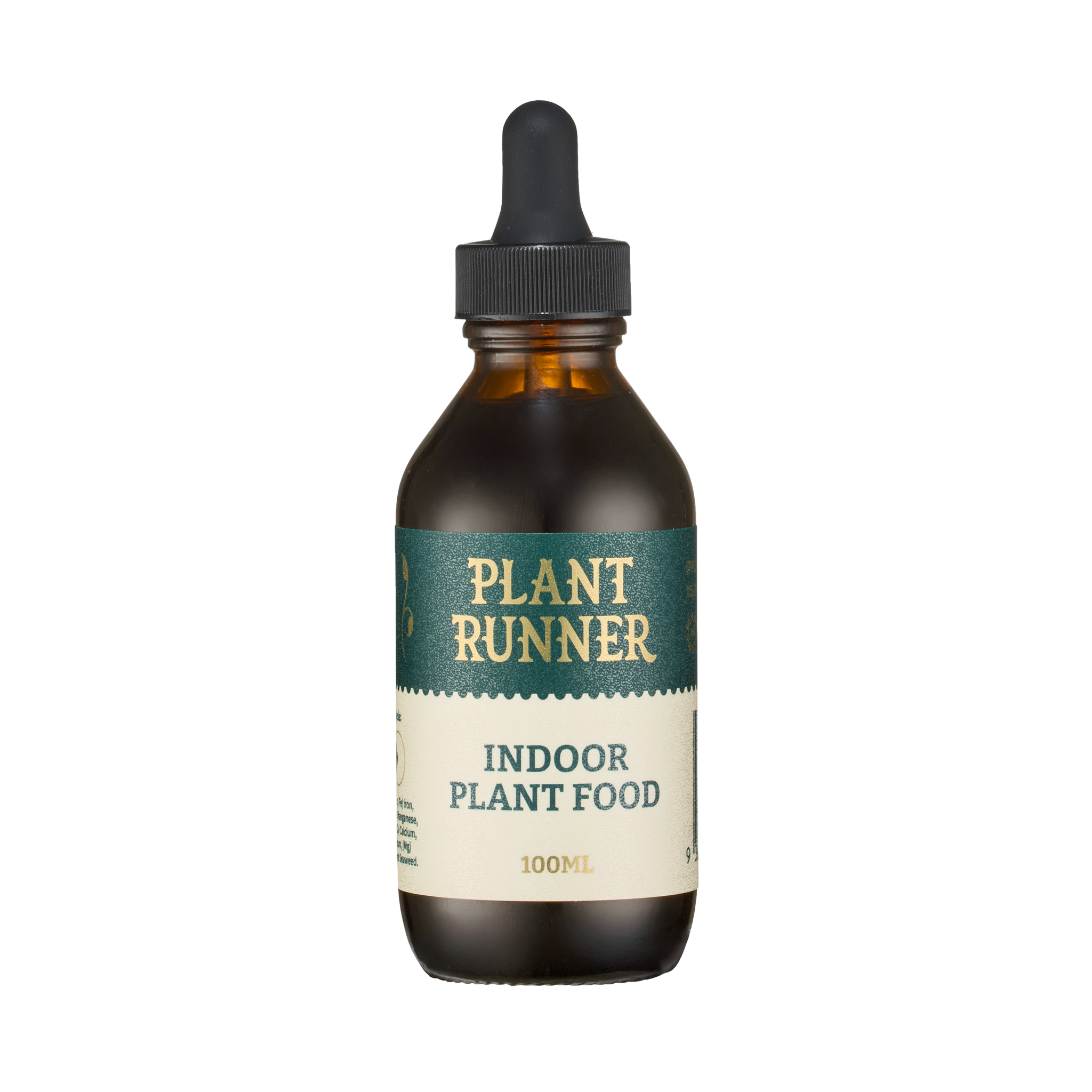




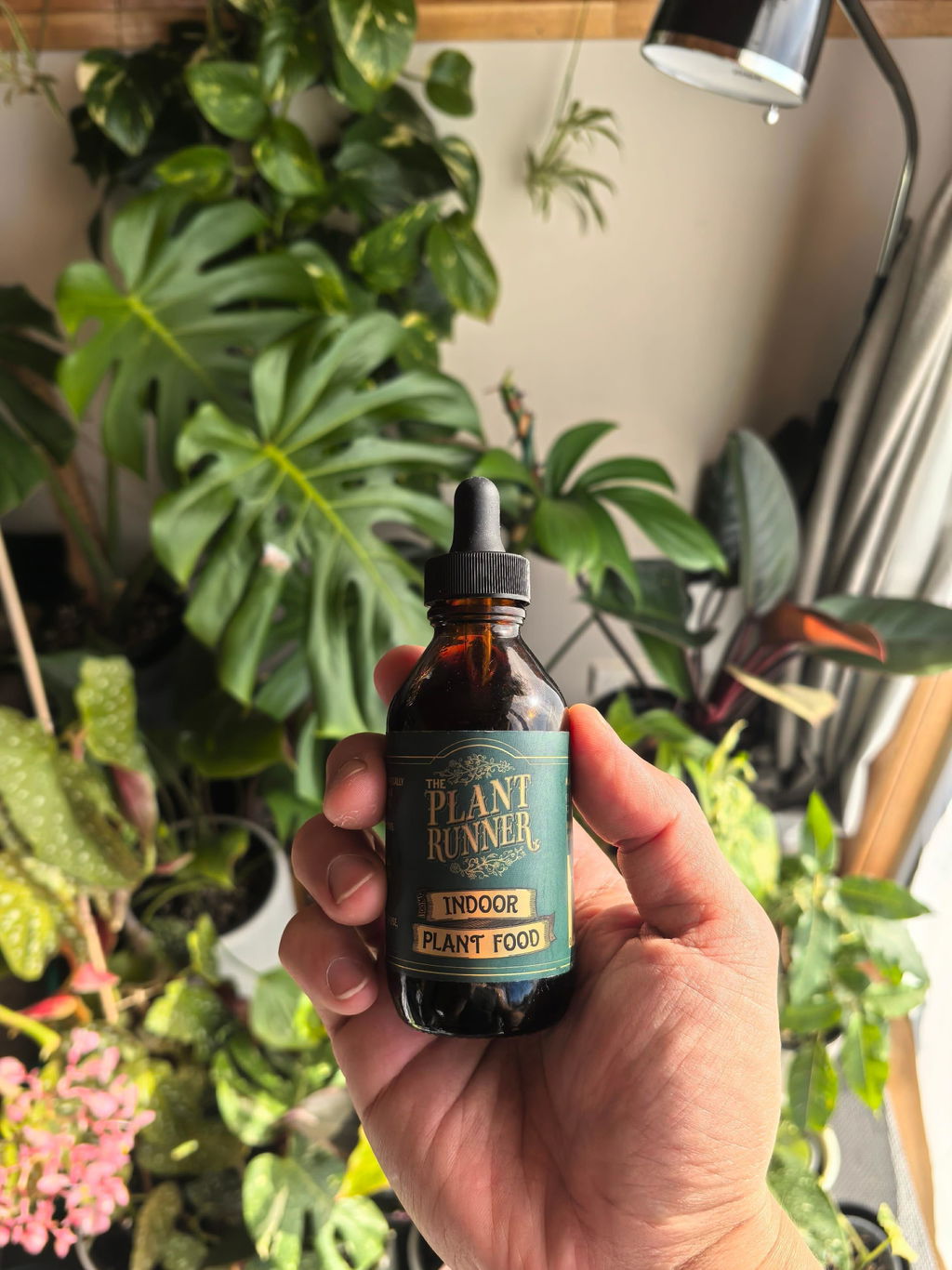
The one thing most indoor plants are quietly missing.
Outdoors, plants send roots through the soil to find what they need. Indoors, they're stuck in a pot with whatever you give them — and once the nutrients in the mix are used up, there's nowhere else to go. Indoor Plant Food is how you keep giving them what they'd otherwise go looking for.
Feed is step four. Light, water and mix come first — that's the Plant Runner Method, in that order. Get those three right, and this is what turns surviving into new leaves.
More than the three letters on the front of most bottles. It's a balanced liquid feed, with 12.2% nitrogen, 11.9% potassium, a full set of trace elements and New Zealand seaweed extract. The traces are chelated to stay available, which matters more than it sounds. Hard tap water is where some trace elements in ordinary feeds can quietly become unavailable.
Made for plants growing in potting mix: monstera, pothos, philodendron, peace lily, fiddle leaf fig, rubber plant, ZZ, ferns and palms. Growing in leca, water or a chunky bark mix with no potting mix at all? That's what Aroid Plant Food is for.
Built around the way you already water. Feed every second watering while your plants are putting out new growth, so there's no schedule to remember. When growth slows, you water less often, so feeding slows with it — and if a plant stops growing altogether, stop feeding until it starts again. It's a forgiving rate: 1ml per litre, measured with the marked dropper, or half-strength for anything sensitive.
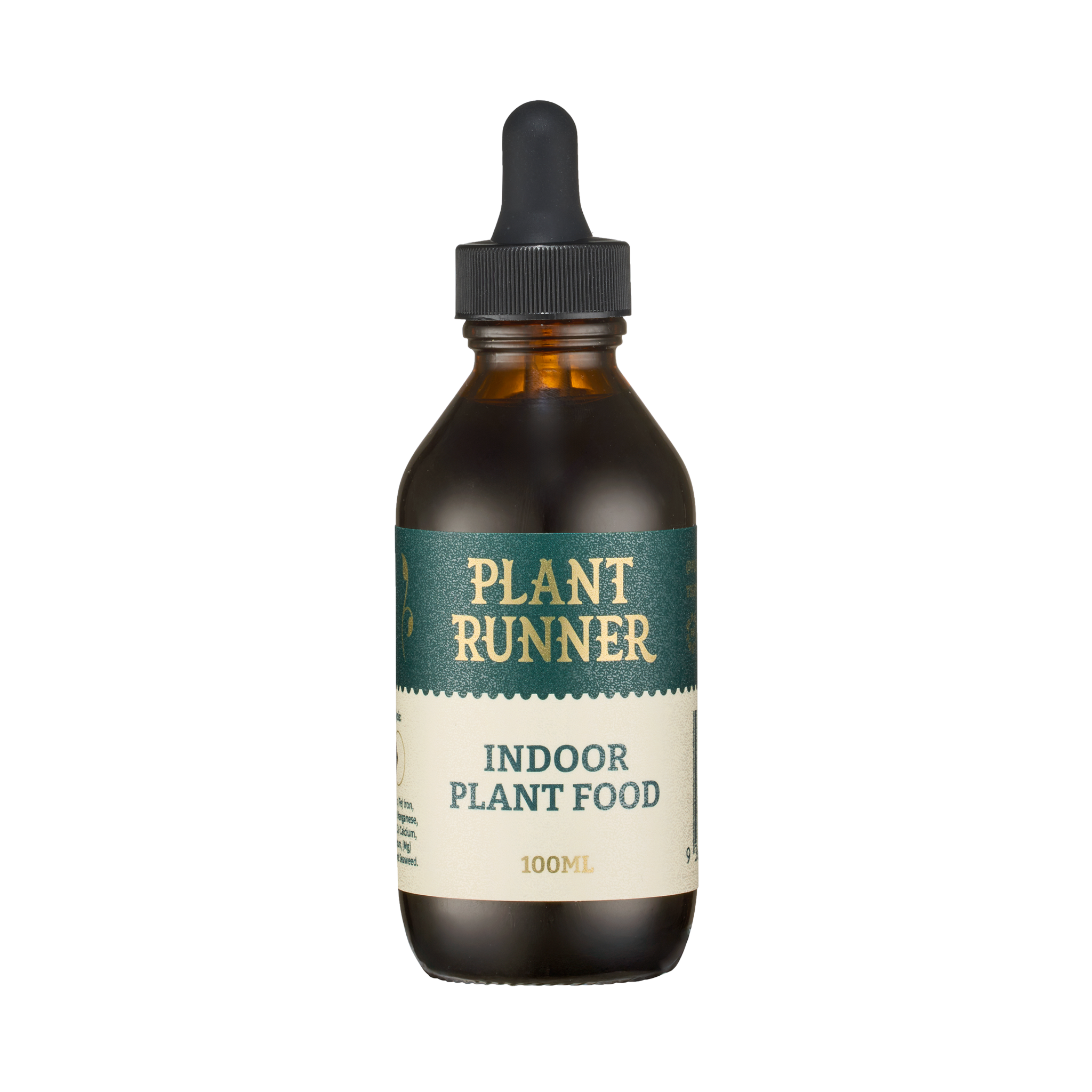
No fish in it. Vegan-friendly and almost completely odourless — nothing hanging around the lounge room for two days afterwards. 100ml of concentrate in a glass bottle makes up to 100L of feed, which for most collections is well over a year.
For the rest of the setup, pair it with Neem Oil Leaf Shine to keep leaves clean and making the most of their light, and Indoor Potting Mix when it's time to repot.
Made in Melbourne, formulated by horticulturalists (a.k.a. our nerdy selves).





While your plants are actively growing (spring and summer for most), feed fortnightly at the standard 1ml/litre rate. Over the cooler months, growth slows — ease back to a half-strength feed about once a month.
The simple rule: feed when the plant is growing, not by the calendar.
Yes — it works well in passive hydro. Add ½ml with each water change while plants are actively growing.
Five years.
1ml per litre of water.
Yes, its fine to use on your orchids
Yes. It's fine outdoors and on edibles — just give your produce a wash before eating, as you would with anything.
Yes. It carries the three macronutrients plants need most — nitrogen, phosphorus and potassium — plus secondary nutrients (calcium and magnesium), a full set of trace elements (boron, iron, manganese, zinc, copper and molybdenum) and seaweed extract. So your plants aren't left short of anything.
Yes and no. It's the same product, with the same NPK and the same nutrient values. The only variable is the seaweed extract: it's shore-harvested and not from a single fixed source, so depending on the batch and variety, the colour can shift slightly. The feed itself is unchanged.
Stick to 1ml per litre and you've got plenty of margin — it's a gentle, complete feed, not a harsh concentrate. If you do go heavier than intended, water through with plain water and resume at the right rate next time. The only real way to cause trouble is feeding hard and often through winter when the plant isn't growing, which lets unused salts build up in the mix. When in doubt, less.
Sometimes, but it's worth being honest: feed helps a healthy plant do more, but it can't rescue one that's struggling with light, water or mix. If a plant is sitting in the wrong light, staying too wet, or stuck in tired mix, sort that first — then feeding gives it something to actually work with. Get the basics right and a good feed is what turns the corner.
It's a plant fertiliser, so it's not for eating — keep the bottle out of reach and stored sensibly, as you would any garden product. Once it's diluted and watered into the pot, there's nothing unusual to worry about. Just don't go drinking the concentrate.
They do different jobs. Indoor Plant Food is your regular liquid feed — the nutrients a plant draws on as it grows. The Soil & Microbe Booster works on the soil, adding beneficial microbes and structure that help the mix stay alive and hold onto what you feed. Plenty of people use both; if you're starting with one, start with the feed.
Featured Post
We created our Indoor Plant Food because we realised so many people had been overlooking the importance of it. A good fertilising regime will keep your plants looking happy and healthy.
Featured Post
Passive hydro (or passive hydroponics) is a type of hydroponic growing method that requires no recirculating systems, and instead supplies water only beneath the plant roots to be used by the plants.
Featured Post
When talking about slow release fertilisers, we are talking about any fertiliser (synthetic or organic) that has been pelletised or produced as something that will slowly release nutrients into the soil over a period of time.
A golden cane is a clump, not a single plant. That tidy pot of arching fronds is usually several seedlings grown together, and every cane in it is one stem...

A Monstera sprawling across the floor isn't misbehaving. It's a climber with nothing to climb. Give it something to climb and it stops sprawling. Give it good light as well,...

By the time you find root rot, the watering mistake is already behind you. What matters now is what's left, and whether the pot it goes back into will do...

--> Plant picks You can't drill, you might move in a year, and the bond is riding on the carpet. Here's what to grow — and the one thing "hard...

A pot isn't sterile. But there's no soil outside it moving back in — what lives there is mostly what went in with it

Heartleaf Philodendron is not a plant that survives neglect. It is a plant that recovers quickly when you correct course — and that is a different thing, even though the...

Fertiliser doesn't fix a plant. It fuels one that's already growing. Most of the time people reach for it, that's not the plant they've got.

A fern that doesn't behave like a fern. No feathery fronds, no misting ritual, no sulking the moment the air dries out.