
Best Indoor Plants for Renters: Hard-to-Kill
--> Plant picks You can't drill, you might move in a year, and the bond is riding on the carpet. Here's what to grow — and the one thing "hard...





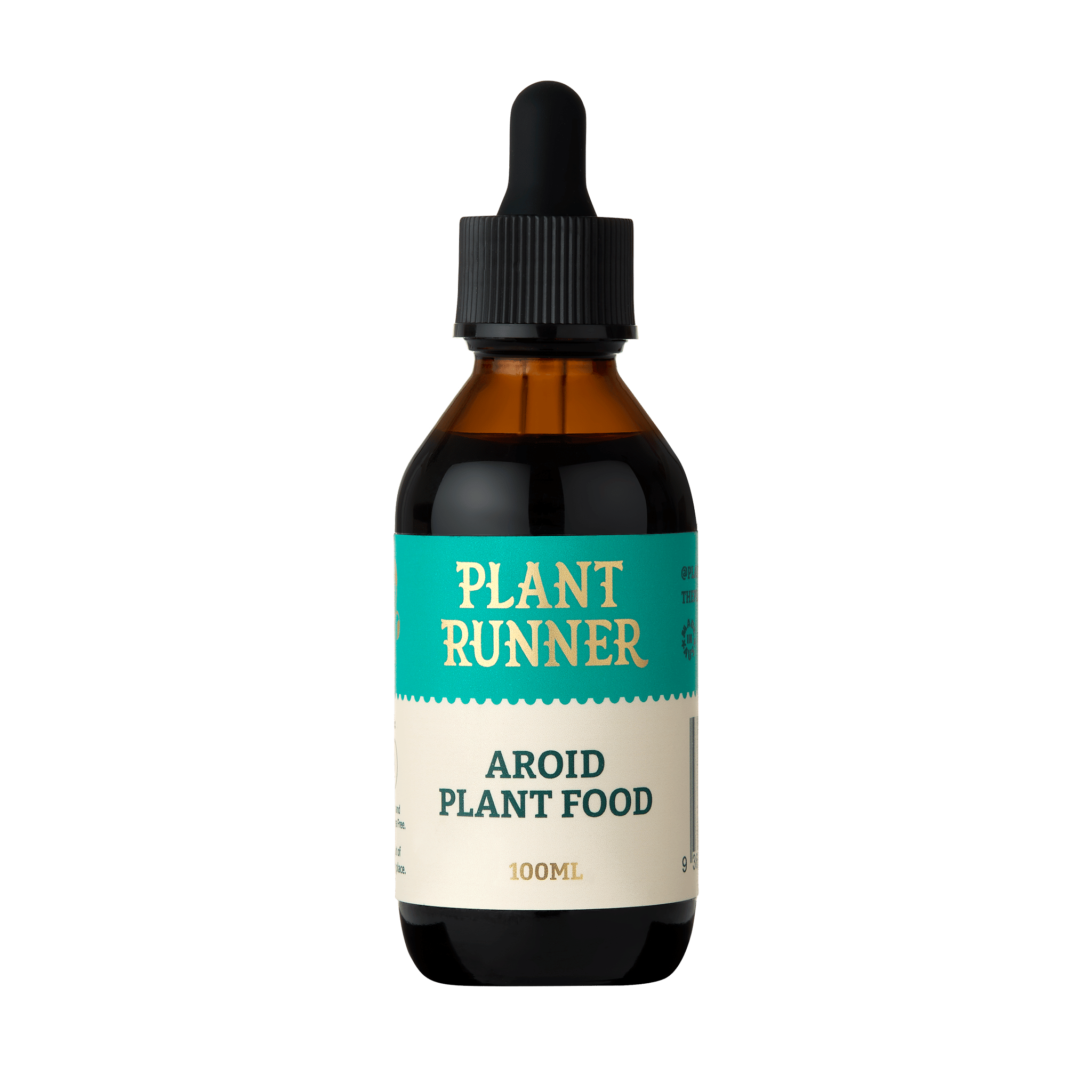


Aroids thrive on steady, consistent nutrition — and our Aroid Food is built exactly for that.
It's a urea-free, nitrate-based formula designed specifically for aroids (think Monstera, Philodendron, Anthurium and friends), with chelated micronutrients plus added calcium and magnesium to support healthy foliage, strong roots, and reliable new growth.
Why urea-free matters: nitrate-based nitrogen is more directly available to your plants in potting media, which means more predictable results and less of the "why isn't anything happening?" frustration.
Why lower phosphorus: at NPK 4.5–1–3, the focus stays on leaf and root growth — not pushing your Monstera into flowering mode it never asked for.
Why chelated micronutrients: chelation keeps trace elements available even in chunky aroid mixes or slightly alkaline tap water — the two situations where standard fertilisers often fall short.
What you'll notice: stronger, cleaner new leaves with better shape and colour. Steadier growth when you stick to a simple routine. And fewer of those "why is the new growth looking pale?" moments.





During active growth — when your plant is actively putting out new leaves — feed every second watering at 2 mL/L. In cooler months when growth slows, pull back to every third or fourth watering, or drop to 1 mL/L. If your plants are still pushing out new growth in winter, you can keep the regular rate — just follow what the plant is doing.
Indoor Plant Food is an all-rounder — great across a wide range of houseplants. Aroid Food is purpose-built for aroids: urea-free, nitrate-based, with a lower phosphorus ratio and added calcium and magnesium. If you're growing a lot of chunky-mix aroids, Aroid Food gives you a more targeted option.
Urea is a common nitrogen source in liquid fertilisers, but it needs to be converted by soil microbes before plants can use it. In chunky aroid mixes with limited microbial activity, that conversion can be slow and inconsistent. Nitrate-based nitrogen skips that step — it's more directly available, which means more reliable feeding results.
The concentrate is acidic to keep calcium and micronutrients stable in the bottle (they can precipitate out at higher pH). Once you dilute it to 2 mL/L, the solution is much gentler and actually works well with the slightly alkaline tap water common across most Australian cities. At the recommended dilution rate, the acidity of the concentrate isn't something you need to worry about.
Yes — start at 1 mL/L with each water change during active growth. Because passive hydro has less buffering than potting mix, it's worth starting low, refreshing the reservoir regularly, and watching for signs of salt build-up or leaf-tip burn before increasing the rate.
Absolutely. The lower phosphorus ratio makes it best suited to foliage-focused plants rather than flowering ones, but most leafy indoor plants will do well on it. If you're after a more general-purpose fertiliser, our Indoor Plant Food is the better fit.
Possibly, yes. Pale or distorted new growth can sometimes point to calcium, magnesium or micronutrient availability issues — especially in chunky mixes, fast-draining pots, or higher-pH tap water areas. Aroid Food is designed to support those nutrients. If the problem keeps happening, it's also worth checking light, watering consistency and root health — feeding is only one piece.
Indoor Plant Food is dosed at 1 mL/L. Aroid Food is 2 mL/L — but the formula is more dilute and balanced differently by design, so the end nutrient delivery is in the right range for aroids. Don't double-dose thinking more is better; the 2 mL/L rate is the sweet spot.
5 years from date of manufacture when stored out of direct sunlight.
We'd recommend sticking to soil application for Aroid Food. The calcium content can leave residue on leaves, which is the opposite of what you're after. For leaf cleaning and shine, our Neem Oil Leaf Shine is the better fit.
Featured Post
Every time your Monstera, Philodendron, or Anthurium pushes out a new leaf, it’s giving you a snapshot of everything that’s been happening behind the scenes — the light it’s been getting, the water, the nutrients available at the roots. It’s the most honest feedback loop in plant care. The catch is knowing how to read it.
Featured Post
Aroids are some of the most rewarding indoor plants to grow. Monsteras, Philodendrons, Anthuriums, Syngoniums and Epipremnums all bring something different, but they tend to have a few things in common: they like bright conditions, they hate sitting in stale wet mix, and they respond well when the foundations are right.
Featured Post
You’ve met them already. The Monstera with windows like someone took a hole punch to a leaf. The Philodendron that refuses to stay put. The Anthurium that looks hand-drawn, velvet and vein and drama. These are aroids—plants from the family Araceae—and they’ve been sneaking into lounges and offices and kitchens for years, acting casual while doing very specific botanical things.
--> Plant picks You can't drill, you might move in a year, and the bond is riding on the carpet. Here's what to grow — and the one thing "hard...

A pot isn't sterile. But there's no soil outside it moving back in — what lives there is mostly what went in with it

Heartleaf Philodendron is not a plant that survives neglect. It is a plant that recovers quickly when you correct course — and that is a different thing, even though the...

Fertiliser doesn't fix a plant. It fuels one that's already growing. Most of the time people reach for it, that's not the plant they've got.

A fern that doesn't behave like a fern. No feathery fronds, no misting ritual, no sulking the moment the air dries out.

A Fiddle Leaf Fig is a tree pretending to be a houseplant. In the wet forests of West Africa it can start life on another tree and end up as...

Aloe vera is one of the few houseplants people buy for a reason other than how it looks. It's been carried around the world and grown in kitchens for centuries,...

Spring is the window, not the reason. A horticulturalist's guide to reading the root zone before you reach for a bigger pot.