
The Signs Your Indoor Plants Are Waking Up
By the time the calendar catches up, most of your plants are already weeks into their restart — quietly, while the heater's still running and you're still wearing the big...






Clean leaves are working leaves.
A leaf is how a plant feeds itself. Outdoors, wind and rain keep foliage clear; indoors, nothing comes along to wash off the film of household dust that settles week after week. That job's on you.
It's a light problem more than a cleaning one. Light is the first thing the Plant Runner Method asks you to get right — and a layer of dust is one more thing sitting between that light and the leaf. A wipe-down lifts the film, brings back the gloss, and lets the leaf get on with using the light it's already got.
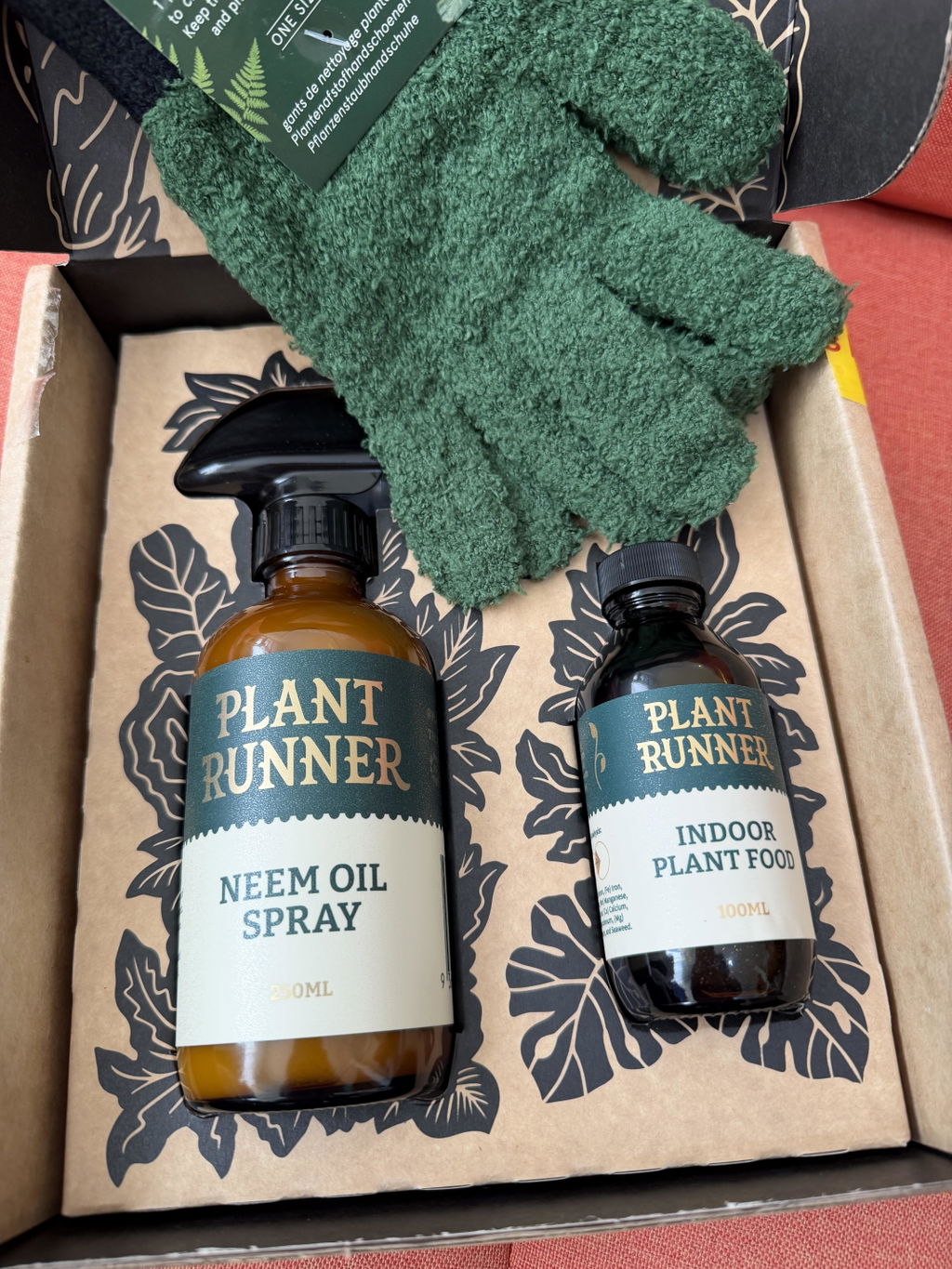
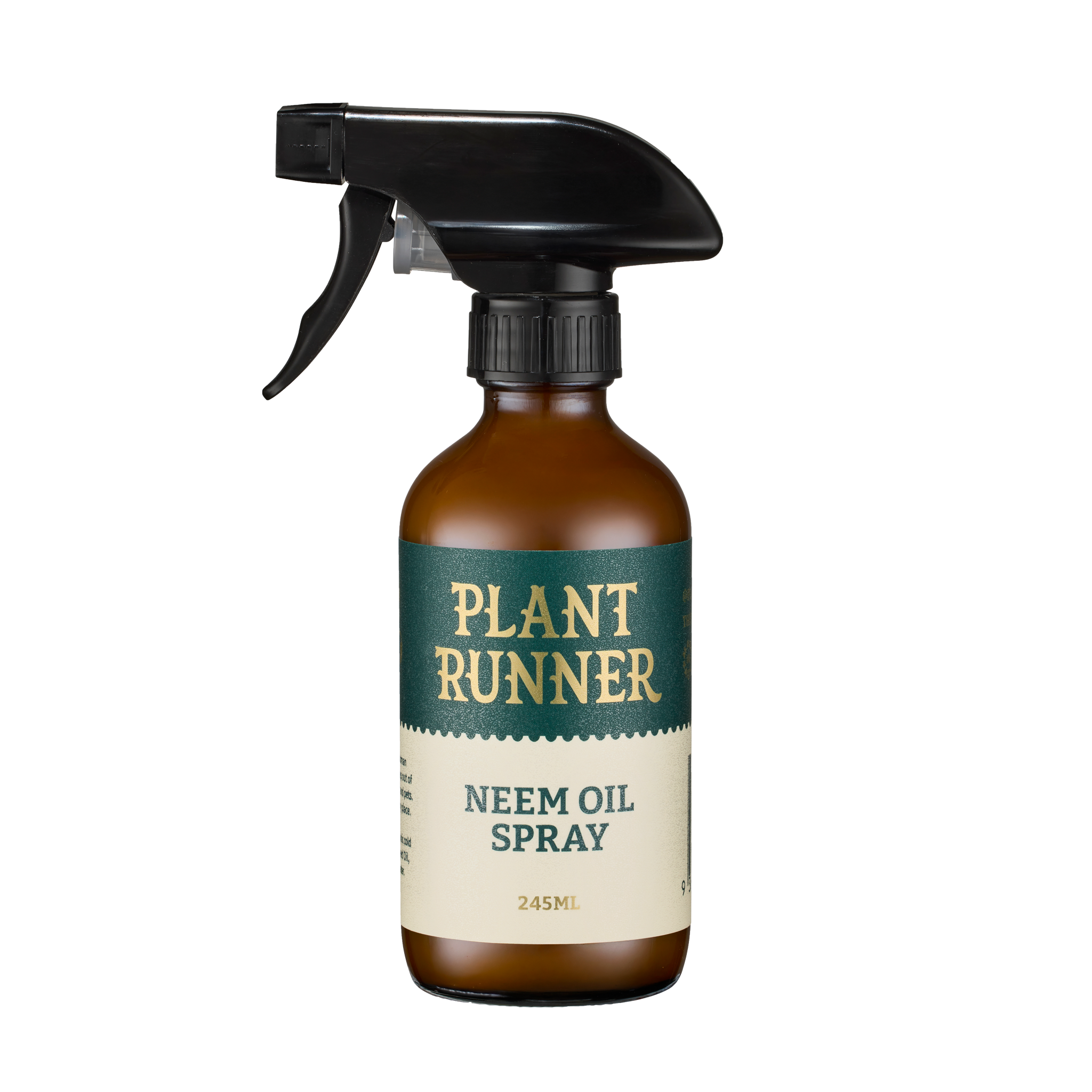
Neem and water don't mix on their own, which is why most neem comes as a concentrate you measure, mix and use within a few days. Ours is already blended — cold-pressed neem seed oil, water, and a plant-based wetting agent that both holds the mix together and keeps the neem stable for twelve months. Shake it and use it, whenever you get to it.
Cold-pressed matters too: pressing the seed without solvents or heat leaves the oil whole, which is why it's golden rather than pale and why it smells the way it does. Refined neem is cheaper, lighter and milder — and less of what you came for. No synthetic fragrance, no artificial glossing agents. It smells like neem, because that's what it is; cover that up and we'd be in the air freshener business.
Spray it onto a soft cloth and wipe leaf by leaf. You use less that way, you get more control, and the result is a clean natural shine rather than a film. It works best on broad, glossy foliage — monstera, rubber plant, philodendron, peace lily, ZZ. Hairy or textured leaves like African violets and some begonias are better left unwiped, and with anything delicate, do one leaf first and see how it looks before you do the lot.
Every few weeks is plenty, or whenever they start looking dull. There's no schedule to keep, and it's the ten minutes of plant care that's actually pleasant. It's also the only time you look at every leaf up close — turn a few over while you're there, because undersides are where pests show up first and early is the only easy time to deal with them.
245ml in a recyclable glass bottle. Pairs with Indoor Plant Food: clean leaves can make better use of the light they're getting, and a good feed gives the plant something to build with. They come together in the Plant Care Essentials bundle.
Made in Melbourne by horticulturalists who started out hand-bottling this exact product at local markets.





Our neem is not registered with the APVMA and therefore we cannot promote it as a pesticide. The active ingredient is Azadirachtin - google it.
One of the great things about Neem Oil is that it is non-comodegenic and therefore it will not clog your plant's pores, unlike other oils on the market.
It's an all-natural, organic product and is safe to use around pets and children when used as directed. As with any plant-care product, keep it out of reach and don't ingest it.
Unlike other neem blends, the active ingredients in our Neem Oil remain active for 12 months after purchasing.
There's no set schedule — wipe leaves down every few weeks, or whenever they're looking dull and dusty. Clean them when they need it, not by the calendar.
It's a foliage cleaner and natural leaf shine. A regular wipe lifts the household dust that settles on indoor leaves and dulls them — clearing it brings back the natural gloss and lets the leaf absorb light properly. Think of it as the indoor stand-in for the wind and rain that keep outdoor plants clean.
Avoid wiping hairy (pubescent) leaves — African Violets and some Begonias are the usual ones — because the texture doesn't suit a wipe-down. For anything delicate or unfamiliar, do a quick patch test on one leaf first.
Best not to. Applying neem to leaves in direct sun can mark them. If your plant sits in direct light during the day, wipe it down in the evening instead.
This is the ready-to-use 245ml spray bottle. The 1L refill is the top-up — pour it into your existing spray bottle (or dab straight onto your cloth) once you've run the first one down. Same oil, less packaging, better value per ml.
Featured Post
Neem trees, scientifically known as Azadirachta indica, predominantly grow in tropical and semi-tropical regions, with India being the primary source. It's a resilient tree, capable of thriving in less fertile soils and demanding weather conditions. The neem tree's leaves, seeds, and bark can all be utilised, but it's the seeds that yield the highest concentration of oil.
Featured Post
Neem oil has been an integral part of plant care for centuries. Originating from the seeds of the Azadirachta indica tree, commonly known as the Neem tree, this potent oil has cemented itself not only in the realms of traditional medicine but also in every avid gardener's kit.
Featured Post
Are your beloved plant babies starting to look a little dusty? Don’t fret! Keeping your plants’ foliage clean isn’t just about aesthetics; it’s crucial for their health, too. Think of it as giving your plant a little spa day. By taking the time to clean their leaves, you’re helping them thrive and look their absolute best.
Featured Post
With the launch of our latest product, Plant Runner Neem Oil, we’ve been overwhelmed with the positive response its had across the country, from our retailers, from their customers, and from our customers. But we’re also aware that it's not something everybody knows about.
By the time the calendar catches up, most of your plants are already weeks into their restart — quietly, while the heater's still running and you're still wearing the big...

There's a quiet assumption in plant care that the answer to almost everything is a bigger pot and a fresh bag of mix. Plant looking tired? Repot it. Growth stalled?...

A big plant changes a room in a way a small one can't. Done well, it makes a room feel finished. Done badly, it slowly browns in the corner while everyone...

Chinese Evergreen is the plant that genuinely earns the low-light label — with a qualification. The dark-leaved, less variegated varieties are among the most light-tolerant indoor plants you can keep....

The short answer is yes, sometimes — and no, not in the way you're probably worried about.

The Peperomia is a plant that is quietly succulent without looking the part. The thick, slightly spongy leaves of most popular types store water, and the root system is small...

The spotted begonia is one of those plants that looks engineered. Olive-green wings scattered with silver dots, a deep red underside, and the whole thing held up on bamboo-like canes....

The Rubber Plant is one of those indoor plants that looks like it belongs in a more demanding category than it actually does. Big, architectural, glossy-leaved — it has the...